

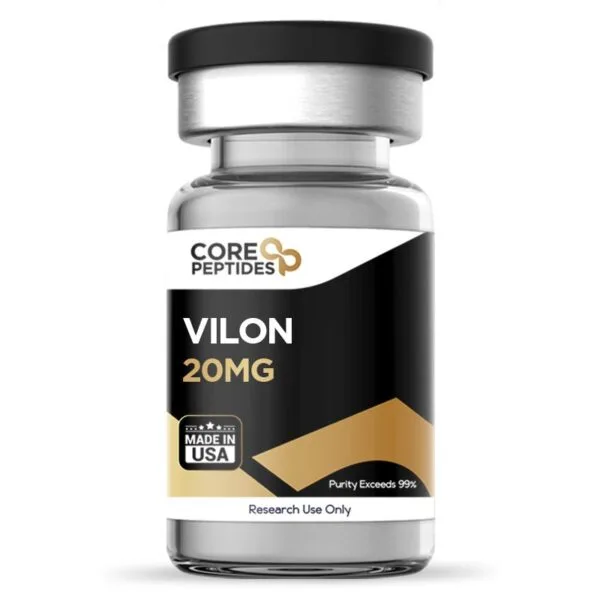


Vilon is a synthetic dipeptide bioregulator (Lys-Glu) developed by Russia’s Saint Petersburg Institute. Bioregulation and Gerontology. Furthermore, this guide explores the scientific literature on this compound. Vilon for sale Including its proposed mechanisms of action. Potential research applications in aging and immunology, and safety profile for preclinical studies. Vilon is classified as a Khavinson peptide and is strictly intended for laboratory research use only, not for human therapeutic applications.
Vilon Peptide: Vilon is the shortest known peptide to exert significant biological action. Hence, It is composed of two amino acids. Lysine (Lys) and glutamic acid (Glu) with the formula C₁₁H₂₁N₃O₅ and a molecular weight of approximately 257.3 g/mol. However, It is synthesized for research purposes and is part of a broader class of short peptides hypothesized to interact with chromatin and influence gene expression.
Vilon peptide side effects: Nupex peptides
Vilon is an ultra-short peptide that appears to “retune” immune and gene-expression programs. Its hypothesized mechanisms of action operate on multiple levels:
-
Vilon peptide benefits: This is Vilon’s most unique hypothesized mechanism. It is believed to interact directly with nuclear chromatin. Binding to DNA and histone proteins to alter chromosomal structure. It may induce . A process that unwinds compacted, transcriptionally silent facultative heterochromatin. This unwinding is theorized to reactivate previously silenced ribosomal genes. Which is essential for a cell’s protein-building capacity and overall rejuvenati
Be the first to review “Vilon for sale (20mg)”
Related products


Reviews
There are no reviews yet.